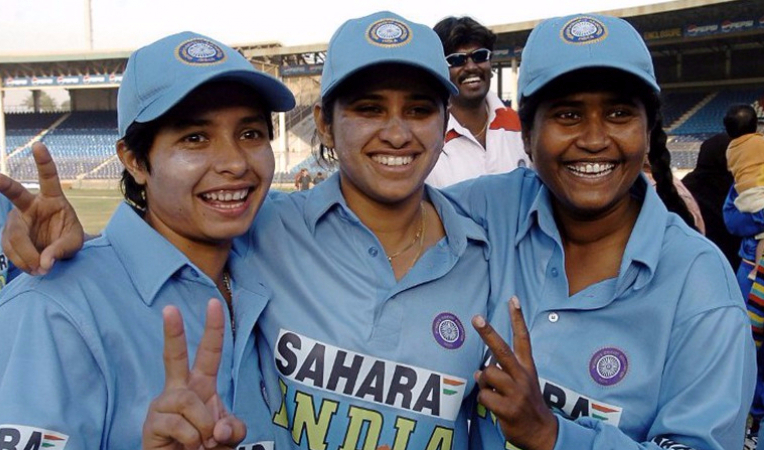
Cricket, India’s most popular sport also happens to be the most underrated one when the women are considered. Women’s sports are always seen as something secondary and inessential. For centuries, cricket remained a province to males, men’s Indian cricket team continued to own a prestigious and amplified position along with over magnified status. Everything opposite to the status is given to the Indian women’s cricket team. The extent of coverage of women’s cricket has got in the past when compared to its male counterpart have been absurdly less. You definitely must have heard about the saying “There is no glory without hard work, similarly the women’s cricket has never been on a smooth road; the hurdles, challenges, downfall these have been nothing less than extremely difficult chase. As posted in my last blog, I talked in brief about the origin and history associated with women’s cricket. Let’s now see what were the odds they faced while playing this league of cricket.
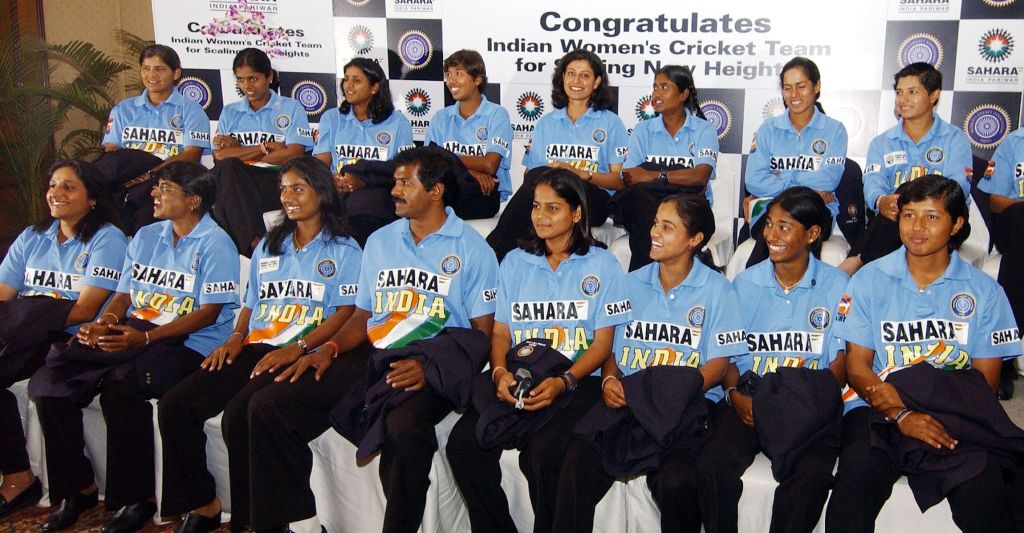
Back then when the Women’s Cricket Association of India (WCAI) was formed by Mr. MK Sharma, he, later on, took responsibility to organize women’s world cup in 1978. However, his decision proved to be wrong when Madras withdrew its name from hosting the last game, which was shifted to Hyderabad at the last moment and created chaos. Moreover, Indian players refused to play against Australia as they didn’t receive their payment of last year. All such incidents happening in the background with much frustration Mr. M.K Sharma resigned from his position. For 4 years i.e from 1978-1982, India didn’t play any international games apart from a tour of young eng players in 1981. Poor management restricted the growth of women’s cricket at that time in India and all were hoping for a change in administration. Surprisingly, WCAI didn’t have any money to send players for the 1982 world cup and the players had to raise funds. India’s first ODI win came in 1982 W.C but lack of Interest in Women’s cricket and disorder in association costed the progress as they weren’t able to send the team for next W.C. However, 1993 W.C proved a significant role as India finished 4th, after which for some years India won several series but their growth was again restricted due to lack of funds.
Gargi Banerjee– 55, another member of the 1978 team said in one of her interviews that “One could technically say that we were sound as any other foreign countries. What worked against us was our lack of experience and physio training or even a single sponsor “. Their vision of breakfast with champions she points out was two slices of bread, one boiled egg and one banana. Ugra says that even if the Indian team had won, there wouldn’t be any celebration or chanting in the stadiums. Diana Edulji remembers ‘The big Patna Incident ‘, she isn’t referring to win against the W.I but W.C match against AUS, An article from sports week says “The height of WCAI’s early euphoria was in October 1975, when a record of 70,000 people saw India beating W.I at Patna. This wave of success turned out to be a blessing in disguise as it bought the sport the danger of being drowned in debts. So the 1978 tournament was held in an era where players used to pay from their pockets to play not only 1978 but later too. The girls would sponsor their travel and accommodation; kits were all self- funded and they shared bats. There was the noticeable absence of sponsor which was overseen by WCAI. Women were playing from their pockets till Patna match after which they decided unanimously not to play until or at least they were reimbursed for miscellaneous payments like traveling expense, recollects Edulji. The tension between management and players was very much transparent; players were reimbursed at last minute via the ticket sales and there was no question of match fees paid in those days, Edulji adds. Before the merge with BCCI the Indian players were paid only on an ad-hoc basis.
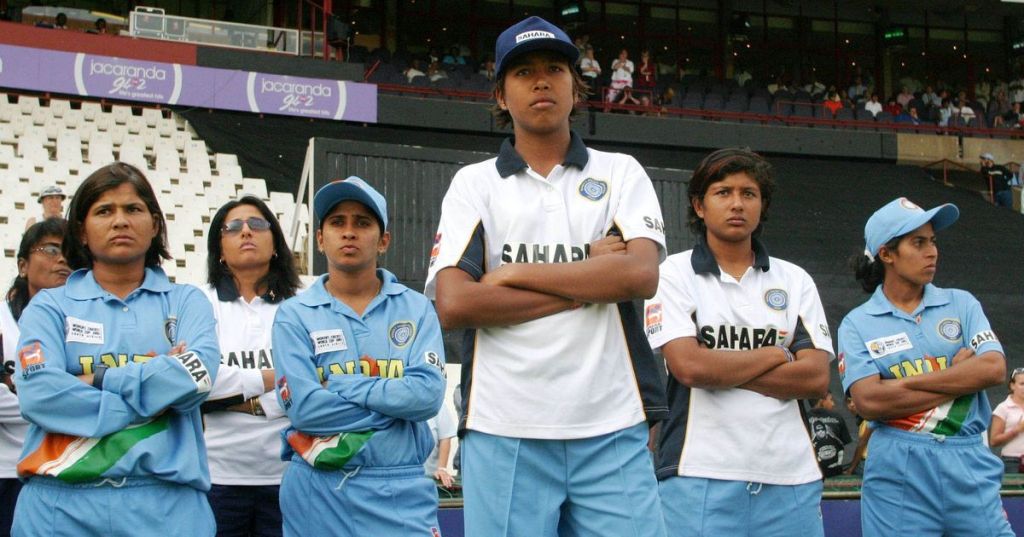
In 2003, former Indian player Shubhangi Kulkarni was handed over the post of WCAI- secretary. Around that time, ICC passed an official instruction to all the members to merge their Women’s cricket board to the national cricket board. BCCI was last to do so in 2006. This didn’t bring a sudden change as there was a lot of money laundering going around but eventually the team started to play more games. In the early days, they managed to organize domestic tournaments so that talent nurturing and talent showcasing could happen. Everyone was expecting a huge change as Kulkarni’s vision was about to get a platform, Interstate T20 competitions and challenger trophy were included that time and Kulkarni had a vision for 2009 W.C. Sharad Pawar, the believer of change in a positive way helped his best to promote women’s cricket along with Kulkarni, they prioritized to build a strong domestic side. The growth took a descending graph when Sharad Pawar’s term ended in 2008 and Kulkarni left the committee which was later on handled by N.Srinivasan who maintained **If I had my way, I wouldn’t let women’s cricket happen** attitude throughout his term, He didn’t mention anywhere about the 2013 W.C which India hosted. BCCI spent 45 times less than the budget they spent on 2011 Men’s W.C. Women’s team got to play less than 30 ODI’s between 2009-13. During the 2013 W.C final, the venue was shifted from Wankhede as it hosted the Ranji trophy’s final match. Even the association was so neglecting for promotions, poorly 2000 children were present in the stadium (given free entry). India’s performance started to suffer badly since 2009 which was all due to poor planning, lack of practice sessions, and BCCI’s policies, with no professional contracts and not assured of their places in the squad.
In an article titled “After the heartbreak, the hard yards for women’s cricket in India” Dileep Premchandran argues that despite BCCI having the hold and responsibility of women’s team, there was no prime push for years in women’s cricket thrived oblivion. He pans the lens towards the off-field scenario where there were no better. Women were rewarded with almost nothingness; they were being paid less than manual laborers, who skipped meals to have a bank balance. How everyone in our country would know about the timings and schedule of upcoming Men’s cricket tournaments but no one would have a slight idea about the women’s W.C until a team reaches finals, harsh but true. Fortunately, there was a sudden change seen under Anurag Thakur’s term when he introduced central contracts in 2015 and gave permissions to players to participate in T20 tournaments in AUS & ENG, and result spoke for itself, our team won 16-ODI’s consecutively, the second-best record behind AUS.
So basically when I summarize what major hurdles these women face are:
- The orthodox culture (sports being associated with males in general)
- The negligence of media attention
- Lack of grassroots sports culture (for females)
- Patriarchy in politics
- Lack of funds, planning, equipment, proper coaching and staff, trainings, exposure, insufficient nutrition, monetary insecurity
- Lack of sponsors and endorsements
- Inactive policies and filthy authorities.
Popularity is a media-driven game. It comes from the support of people and considering the hard truth of India being a male-dominated society it’s apparent where the support of the people is concentrated for the sports. Women’s cricket in India strives for the same limelight as the exceptional men’s cricket team does and a patriarchal India is so impotent of giving women that much eminence just yet. The effort that females put in and the amount of strength and determination that is required to perform on the field cannot be subjected to the comparison on the ground. Indeed it is a more demanding task for the females to perform under the influence of extensive pressure. There are uncountable hurdles in the path of a female cricketer starting from not getting the appreciation and sufficient reorganization. Forty out of one hundred percent of all participants in sports are female, regardless of those women sports gets only 4% media coverage, and female athletes by a greater margin are portrayed in sexually provocative poses more than male athletes. The truth is that people perceive how the media let them. Consequently, the lack of popularity of the sport originates from the inadequate coverage given by media. There also exists a perception that what women perform under the title sports is substandard. Women’s sport is an afterthought after the men’s sports coverage; it has never approached media as something primary, essential, complete, and as a top agenda item as so is their insufficient budgeting for female sports. The fact that we currently seem to think women’s cricket has some obligation to aspire to the “level” of men’s cricket reveals the poverty of our imagination. If we bother to learn about women’s cricket, we might, in turn learn more about ourselves as people. But this won’t happen until we let go of the worldview which makes men the point of reference for everything.
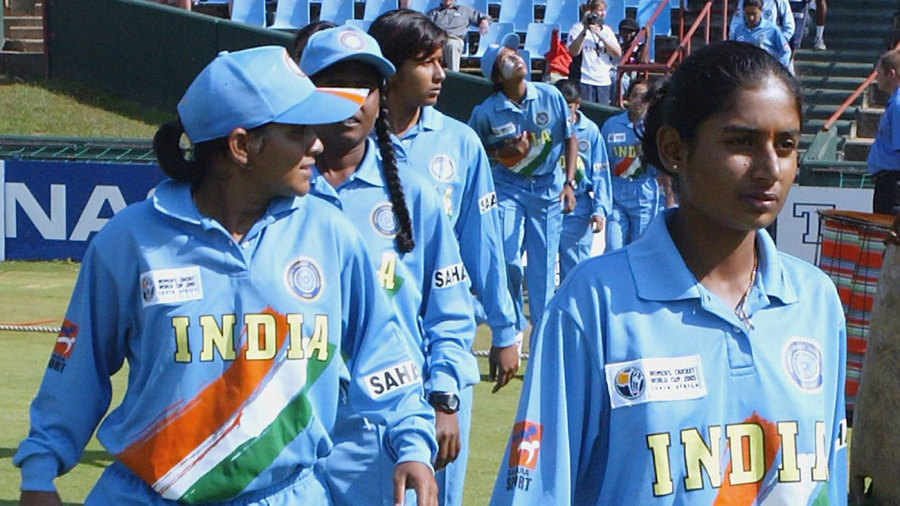
There isn’t any competition without competitors; likewise I don’t think there should be judgment without equalities. We must treat cricket as cricket rather than associating it with genders. I won’t disagree that scientifically men are proven superior when it comes to physical strength and capabilities but playing sport isn’t only about the strength and physical capacity but zeal, enthusiasm, hard work, passion to perform, determination to win and we can’t ignore the talent, talent, of course, cannot be marginalized. No doubt the growth has taken place but the growth is gradual and our women cricketers don’t deserve to throw away or compensate their talent and hard work due to lack of motivation and acknowledgment. It’s a long way but not impossible to reach. I hope you are liking the content, Stay tuned for the next part!!
SOURCES: WIKIPEDIA, XPLORE SPORTS (before and after scenario of BCCI takeover), LIVEMINT.COM (A WorldCup lost and found), INTERNATIONAL JOURNAL OF PHYSICAL EDUCATION, SPORTS AND HEALTH-2018 (case study of Indian women cricket), THE HINDU READS.
 More out of Cricket